
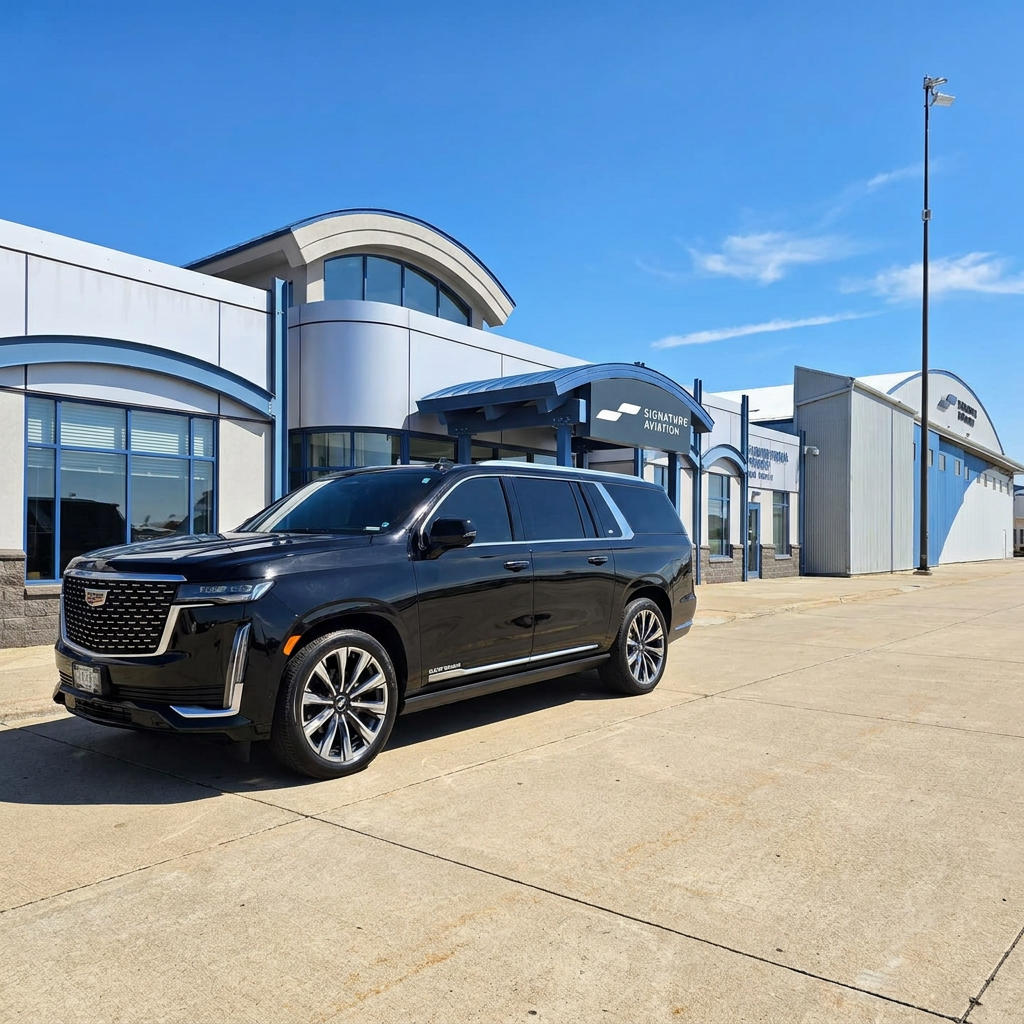
Most business trips don't fall apart in the air. They fall apart on the ground, waiting for a ride that isn't there yet, or explaining a $40 rideshare receipt to accounting for the third time this month. The fix isn't a better flight. It's five small habits around it.
Quick answer
Book ground transport before you land, put it on one monthly invoice instead of five expense reports, match your terminal to your airline ahead of time, book hourly instead of one-way for multi-stop days, and let an assistant handle the booking if you've got one. None of it is complicated. All of it saves time you don't get back.
1. Book ground transport before you land
Arranging a ride after you've already landed means you're doing it with a rolling bag, spotty terminal Wi-Fi, and everyone else on your flight doing the exact same thing. A flat-rate reservation made before you leave means the only thing waiting for you at baggage claim is a driver holding a sign with your name, already tracking your flight, already adjusted for whatever the weather did to your schedule.
2. Put it on one invoice, not five receipts
If you fly through MSP more than once a month, five separate rideshare receipts turn into five separate line items someone has to approve. Monthly invoicing consolidates every trip into one bill, so the finance team sees one number instead of chasing down what "Uber Trip" actually was on the 14th.
3. Know your terminal before you land
MSP splits across two terminals a mile and a half apart, and the airline decides which one you land at, not you. Delta, American, and United land at Terminal 1. Southwest and Sun Country land at Terminal 2. Mixing them up costs you fifteen minutes you didn't budget for a meeting that starts on time whether you're there or not. We cover the full breakdown, including which airline uses which terminal, in our terminal guide.
4. Book hourly for a day with more than one stop
Airport to hotel, hotel to office, office back to the airport is three one-way bookings, three chances for something to run late, and three separate fares. An hourly charter keeps the same driver and vehicle with you for the block of time you actually need, which is both simpler to manage and usually cheaper than stacking one-ways.
5. Let your assistant book it
If someone else manages your calendar, they can manage your ground transportation too. Corporate accounts allow an assistant or travel coordinator to book on your behalf, with confirmation details sent to both of you, so you find out about the ride the same way you find out about the meeting.
"The best business trip is the one where the travel part never comes up in conversation."